
Thermostat Fan Settings: Should You Use \"Auto\" or \"On\"?
If your thermostat has two fan settings - "Auto" and "On" - you might be wondering which one is best for your home. There's no single best choice for every home. But understanding how each setting works can help you make a more informed decision based on comfort, air quality, and energy use.
What Does "Auto" Mean on a Thermostat?
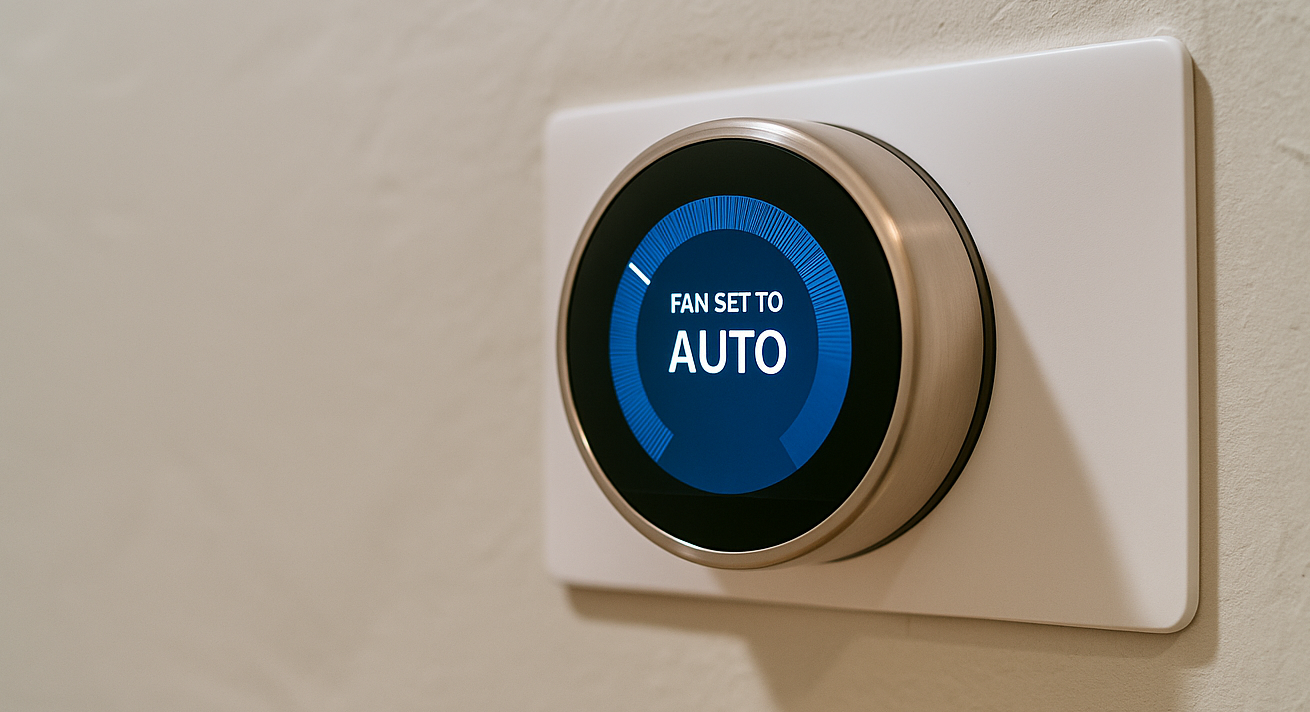
When your fan is set to Auto, it only runs when your heating or cooling system is actively running. Once your furnace or air conditioner reaches the set temperature, the fan shuts off - though in some systems, it may stay on briefly to push out any remaining heated or cooled air.
This is the most common setting and the one many homeowners leave on by default.
What Does "On" Mean on a Thermostat?
When the fan is set to "On", it runs 24/7 - regardless of whether your furnace or AC is running. That means air is always moving through your system, pulled in through your returns and pushed out through your vents.
Which Setting Should You Use?
The main difference comes down to air circulation and air filtration.
Because nearly every HVAC system includes at least a basic air filter - and many use upgraded filtration or purification systems - setting your fan to "On" means air will be filtered all the time, not just when your system is heating or cooling. That can help improve indoor air quality by continuously pulling dust, allergens, and other particles out of the air.
In contrast, the "Auto" setting only filters air while the system is running, which may leave air sitting stagnant in between cycles.
If your goal is cleaner, more consistent airflow and filtration, the "On" setting may offer better results - especially in households with allergy sufferers, pets, or smokers.
That said, the "Auto" setting can still be the better choice if you're looking to conserve energy or reduce filter changes. It's a reasonable choice if energy savings matter more than constant air circulation.
Are There Any Downsides to Using the "On" Setting?
Running your fan continuously can improve air quality, but it does come with a couple of trade-offs. First, you'll likely need to change your filter more often. With air always circulating, your filter collects more dust, pet hair, and other particles - which means it fills up faster. Standard filters may need to be replaced more frequently, while higher-end filters tend to last a bit longer.
You may also see a slight bump in your electric bill. A fan that runs 24/7 uses more energy than one that only runs with the furnace or AC. The difference is usually minor - about the same as running a couple ceiling fans full-time - but it's still something to consider.
For many homeowners, the added comfort and cleaner air make it well worth it. But it really depends on your priorities, your system, and how often you're running it.
Over the years, we've worked with all kinds of systems in homes across Northwest Ohio - from basic setups with 1-inch filters to high-efficiency units with whole-house air cleaners. In most cases, we've found that simply adjusting the fan setting can make a noticeable difference in air quality and comfort.
The Bottom Line
Every home is different. If you have pets, allergies, or live in an area with poor outdoor air quality, running your fan continuously may be worth it. If energy savings are your main concern, sticking with "Auto" is perfectly fine - just be sure to check your filter regularly either way.
Still unsure which setting is right for you? We're happy to help!
Call us at 419-698-HVAC (4822) to schedule a consultation or learn more about our services.